Naturally worthwhile

I am so often left speechless, in awe of the beauty surrounding us in Nature. So many throughout history have done likewise and searched ‘out there’ for the cause or creator of such beauty. I was challenged a few weeks ago, to rather look more deeply ‘into’ it and find meaning there.

There are many names we could use for God; the Universe, Presence, Mystery to name a few. Whatever name you are drawn to, this ‘otherness’ is displayed in and through all things if you look closely enough. That doesn’t necessarily mean they ‘are’ it, but that they portray an element of it.

I believe all things are of innate value due to the ‘image of God’ they portray. Therefore all of Nature, wildlife and humanity are in some sense, inherently good and worthy of love. In a mystical and amazing way this means that we share a connection with all that is around us.

This gives me a feeling of responsibility towards the natural world and all that is in it. For through it more of this mystery called ‘God’ is revealed. We, the human race, have become so disconnected from Nature that we have lost sight of its importance; not only within its own right but also its importance for our own health, well-being and identity.


“The heavens declare the glory of God, the skies proclaim the work of his hands. Day after day they pour forth speech; night after night they reveal knowledge.”

Psalm 19:1-2
And he will be called…

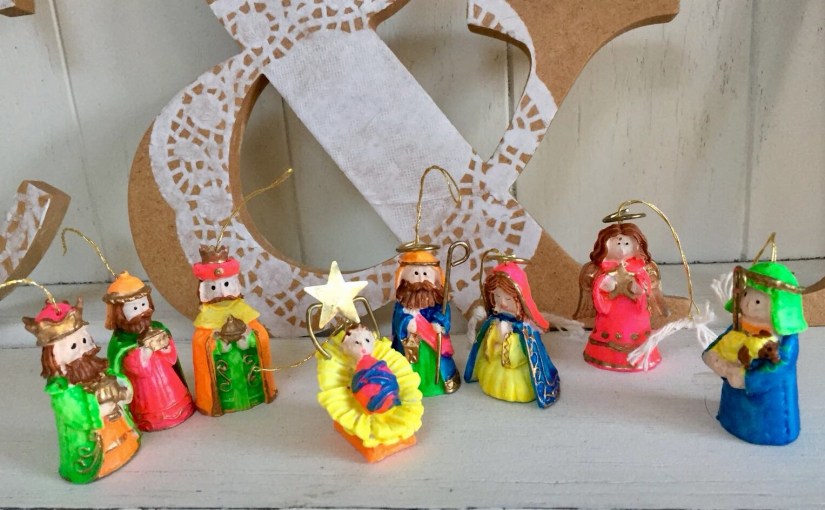
This poem is a reflection on the Christmas story; as the birth of the man called Jesus.


“And he will called wonderful counsellor.


A little baby he was born so vulnerable and weak,

His daily routine consisted of noise, food and sleep,

But not necessarily in that order,

To his parents he was a miracle of life the very same life he came to reorder.


They watched his first steps and heard his first words,

Saw Creator God smile at small chirping birds,

Their growing little boy they brought up a good man,

Taught to pray each night he’d be part of God’s plan.


And he will be called wonderful counsellor.


Playing in the backyard or out on the street,

Forsaken his shoes preferred are bare feet,

Like all children being fully in the moment;

Kicking a football, racing an opponent.


He went to your school was taught by your teachers,

Yet quizzed religious leaders leaving them speechless,

Through thick and thin you’ve been as your friendship has grown,

This love isn’t pretend each other’s secrets you’ve known.


And he will be called wonderful counsellor.


A following he gathered as his wisdom was shared,

Of those within hearing no conscience was spared,

Teachings as sharp as the edge of a sword,

But for spiritual seekers the words struck a chord.


Miraculous signs followed him in every direction,

He fed five thousand despite the meagre collection,

Thy kingdom come he taught us to pray,

While fulfilling that statement his very birth day.


And he will be called wonderful counsellor.


Aimed at the powerful his rebukes had a sting,

While the lost and rejected he welcomed back in,

He literally turned tables challenged the status quo,

Simultaneously God and Man two thousand years ago.


He rocked the boat too much for the for the ruling elite,

Charged a thief and a robber was nailed to a tree,

He walked a lifetime in our shoes in him we can trust,

The Grand mystery made known Immanuel – God is with us.”

Love like skin

Love like skin,

I wish I could describe it clearly; building sentences to encompass this perfect thing, but these letters are too feeble I fear. No adequate structure can house the maternal, paternal spirit that eternally permeates all here.

Infinite envelopes finite; two things so opposed they’re like day and night. They don’t exist on the same plane, one soaring up high the other still on the runway. The only time we experience such a gift is in this current moment. Maybe that’s why it’s called the present.

Love like skin,

It’s describing beautiful art, completely failing to convey the depth of emotion, the power within creation. Yet these very words are the vehicles we use to arrive at an understanding destination.

Holding me closely, sealing my entirety within. It amplifies my good, and nullifies my sin. Through a distillation process it makes me what I should be. It fits so well, like a tailored suit, it was made just for me!

Love like skin,

It’s with me everywhere, on the outside, within. If you cut me it bleeds. When I walk down dark alleys it leads. The dirt of life, the stains of selfishness to it they cling. You can’t remove the king from this skin.

I lay myself bare when I paint you this image, I don’t claim wisdom but seek to encourage. My desire; we all climb this mountain called knowledge until in future we ascend the final ridge.

Love like skin,

For now I only see dimly as I walk through life’s journey. The route I go you can’t, it’s custom-made we each have our part. But in shared symbol and image our foundations are laid.

A Fathers compassion for his prodigal repenting, a Mothers heart for her dear children, he causes it to rain on the righteous and the unrighteous without distinction. And as these raindrops coat all in a film that’s glistening so his love covers all like skin.

What if…

What if I’m open?

What if I risked being wrong?

I’ve caught glimpses of things that never were, had visions of happenings that possibly are.

These inklings, fleeting ripples in perception are beyond my understanding.

What if I’m mad, my brain deceived my spirit hoodwinked?

What if it’s just me, my imagination gone wild?

And yet it goes deep you know, knows me….somehow.

I talk, I listen and it responds, each time a different way. Sometimes imperceptibly and others clear as day.

What if it’s real?

What if it’s here, does it feel?

I ask waiting to receive, seek looking to find.

I knock on the door, what if it opens?

Light shines in the darkness

After hearing about the Manchester attack, I was thinking about the growing number of terrorist attacks we are seeing and hearing about these days; there doesn’t seem to be anywhere that is untouched.

[This post seems even more poignant now after the attack at London not 2 days ago. I was writing it as the attacks were happening!]

I find it so sad to see the hurt and pain people are willing to cause each other. Especially when they claim they are doing it in the name of a divine being!

Unfortunately this is a repeating pattern throughout history; people claiming their acts of violence in the name of the divine. Yet underneath this zealous religiosity is normally a more vain, self-centred and very human desire; power.

In complete contrast, what I believe does show something of the divine is the beautiful acts of compassion and kindness that people demonstrate immediately after such monstrous acts are perpetrated.

The way societies minister to each other; the homeless giving first aid support, strangers looking out for strangers and celebrities instantly changing their schedules to put on a massive charity event in support of the people affected. All of the divisions that day-to-day separate us, completely vanish in that instant. Instead of ‘them’ we just see ‘our own’ hurt and in need.

It seems that not only inspite of, but as a direct result of such grotesque acts of violence, beautiful acts of love shine and sparkle all the more in the darkness, bringing people closer together.

That for me is the divine in action.

The light shines in the darkness, and the darkness has not overcome it.

John 1:5


True hardship

No one likes hardship or suffering, yet it is almost inevitable we will experience it.

That may not be an agreeable idea to you because we all have a wired-in fear of hardship and suffering, and rightly so. But maybe, if we sought to change our attitude towards hardship we might begin see it as an opportunity for learning and development. A chance for our roots to grow deeper.

I don’t by any means say that flippantly, like somehow you can click you’re fingers and perceive it differently. Yet by learning to change the language of our internal monologue from negative and pessimistic, to positive and optimistic we can begin to see things differently. (This links back to my post on ‘Being content‘)

Interestingly, however if you look at the biographies of many people, which society would call ‘great’, you will clearly see the thread of suffering and hardship running through their story.

These people would often describe the hardship they endured as being one of the elements that formed, or shaped them as a person.

Nelson Mandela, is a prime example. The hardship and oppression he was born into as a black man in Apartheid South Africa, and his struggle for the freedom of his people, was the furnace that forged him into the inspirational leader he later became.

He came face to face with the ‘evil’ in humanity and could not settle for the injustice he saw around him. In doing so he chose a path of hardship; one that drove him to a deeper way of existing within the storms that beset him. In prison he had space to reflect on this and see the pointlessness of tit-for-tat behaviour.

As such when he was released from prison and became president he was able to lead the people of South Africa forward in reconciliation between prisoners and captors without perpetuating the cycle of hatred and violence that had gone before.

If he hadn’t been forced to search more deeply within himself I don’t think he would have been able to lead the way that he did.

So what are your hardships? Where are you suffering? And how can these uncomfortable moments help you search more deeply within yourself and your world view for a truer way of being?


“We know that suffering produces perseverance; perseverance, character; and character, hope.”

Romans 5:3-4

The Presence

‘The Presence’ has many names and is experienced by people in many different ways. Yet what is common in peoples’ references to these indescribable moments is the overwhelming sense of awareness at a deep, ‘soul level’. This can be of peace and ‘at-oneness’, or a jarring and painful experience.

We all experience these moments; they usually seem like an eternity at the time but on reflection were momentary. We are never able fully remember or re-create the essence of that moment.

It could be found in the sight of a beautiful natural vista, in facing the destruction caused by war, in hearing a moving piece of music, in experiencing a loving relationship, in loss felt at the death of one loved , or the awe inspired by gazing at the stars in the night sky. Many moments can bring us to this point of awareness; into ‘The Presence’.

These moments profoundly affect us and we have the choice to either engage with them, or pass them by and forget. I believe it is in these epiphanies that we brush up against ‘The Presence’; the essence and meaning of everything that is and it is through engaging with these experiences that we progress in our spiritual journey of development.

Many of us are so busy with ‘everyday’ things that we lose perspective on what it really means to ‘exist’. We become shut off to a broader awareness of what is beyond ourselves. Mindfulness and meditation can serve us well in opening ourselves up again to ‘The Presence’.

For at the fringes of our perception are expansive open spaces that we rarely tread, places where intuition and perception are our guides. These spaces can seem wild and foreign but at the same time familiar. This is where we will find and rest in ‘The Presence’.

“He has made everything beautiful in its time. He has also set eternity in the human heart; yet no one can fathom what God has done from beginning to end.”

Ecclesiastes 3:11

Collective Wisdom

Abraham Lincoln, Ghandi, C. S. Lewis, Lao Tzu.

These are but a few people who have been able to powerfully speak into society and culture, bringing about change.

If you look back at their lives you will notice a recurring theme; they learnt from the collective wisdom of humanity through wide study and reading. They were also influenced by engagement with their contemporaries and the spiritual wisdom of their own belief system. In doing so they were able to discern lessons and principles that they applied to their time.

It is worth pointing out that by ‘collective wisdom’ I mean to describe wisdom, from both our forebears; those who have walked the path before us, and our contemporaries; the fellow pilgrims we share this journey with.

Our development depends on us not missing what is being revealed, nor being so arrogant as to assume that we know better than those before us. It is vital that we make use of this collective wisdom lest it be lost, or forgotten.

Accessing ‘collective wisdom’, however requires us to be willing to learn from others, which is easier said than done.

Learning from others, requires us to think of them and their truths as highly as we think of ourselves and our truths. This necessitates not only humility but courage to let our defences down and  be open to being  influenced by them.

This vulnerablity with others opens up the possibility of being hurt; and herein lies the real challenge to our spiritual development.

…..

What has been is what will be, and what has been done is what will be done; there is nothing new under the sun.

Ecclesiastes 1:9

Being Content

What is it to be content, or find contentment?

A number of questions spring; Is it internally or externally gained? Is it physical or spiritual in nature? Is it an emotion or a choice?

All too often contentment is confused with happiness and joy. However joy and happiness are emotions that well up within us, we feel them – when you are reunited with a close relative or friend after a long period of time. But like all emotions they waiver and fade, soon replaced by others.

Many spiritual traditions describe contentment as a state of being, one that is achieved by making peace with your situation and circumstances. To me this describes something deeper than emotions, which can be as changeable as the wind.

We are rarely in control of the circumstances of life and the ocean of our emotions can go from idyllically calm to sickeningly tumultuous in the blink of an eye. Yet if we exist at deeper level, beneath the waves, we can be content regardless of the raging storms above.

This in no way means we shouldn’t feel our emotions, for it is both natural and healthy to fully do so. What it does mean, is that we are not controlled and derailed by them. Instead we choose how to respond to them. Achieving this state of being is the work of a lifetime, and for it to be habitual, it must be practised in both the highs, and the lows of our journey.

A simple practice that can be used as a beginning is developing at an attitude of gratitude, by meditating on what you are thankful for. A focus on what is good enables us to resist becoming fixated on the things that are troubling us. Rather than avoiding them we are able put them into perspective in such a way that allows us to begin working through them on our own terms.

Fix your thoughts on what is true, and honourable, and right, and pure, and lovely, and admirable. Think about things that are excellent and worthy of praise.

Philippians 4:8

‘Finding Yourself’

It sounds clichéd doesn’t it! However in reality most people spend large portions of their lives trying to ‘find themselves’, and where they ‘fit’, or ‘belong’. Feeling like you have found yourself, I believe is strongly linked to having purpose.

A ‘calling‘ can be defined as, ‘a strong impulse or inclination towards a particular way of life, activity or career, or vocation.

Yet it can be difficult to figure out what that might be. There are so many conflicting views on what validates calling. Increasingly in our consumer-driven society the validation is based around whether it will bring acknowledgement and be profitable. Neither of which I feel are helpful in this process.

Why is finding my calling, or purpose important?

A calling at its heart it is the thing or things that in doing you feel most deeply fulfilled and realised as a person. I remember a quote that puts it like this:

‘Work should be as close as possible to the fulfilment of our natures and the expression of our divine creativeness – work shall be such as a man or woman may do it with their whole heart, and that they shall do it for the very work’s sake.

It provides us with purpose, meaning and ultimately self-acceptance which in turn empowers us to accept and honour others.

How do I find my calling?

There are many different ways you could discern what your calling is. I offer one method which I found useful and have adapted slightly from the author Stephen Covey in his book ‘The seven habits of highly effective people’.

I have adapted this exercise into a meditation which may help you to begin to engage with those thoughts and feelings at the centre of your being. It will help you imagine outside of your false self or ego allowing you to be vulnerable with yourself.

In the process, my hope is that you will learn to be gracious towards yourself, whilst at the same time realising areas within your sphere of influence, that you have power to proactively make positive changes in.

What do I do once I’ve found my calling?

Live it out, pursue it and let it transform your entire being, your outlook, your politics, your relationships and your society. Be an example of it to others and guide them to their own journey of self-discovery.

The Meditation

You need to invest good amount of time in this as there will be a lot of information brought up that you will need to process. Make notes as you go along and feel free to break the meditation up into sections if that works best for you.

Setting the scene 

Imagine you live a long and successful life. on your 100th birthday your family organise a surprise party for you. There are people invited from all the different areas of your life. Imagine the colours, the smells, the excitement and happiness in that space.

All these people are here to honour you and express their love and appreciation for you and your life.

During the party 4 people from different areas of your life get up to give a speech about you; someone from your family, someone from your friendship group, someone from your work and someone from a community project that you have been involved in.

Visualisation

Spend some time thinking about what you would want each of these people to say about you.

  • Your family – what would you want them to say about you? what were you like as a spouse, a parent, a brother or sister, a relative? Your character? Your motivations? Your gifts and talents?


  • Your friend – what would you want them to say about you? what were you like as a friend? Your character? Your motivations? Your gifts and talents?


  • Your work colleague – what would you want them to say about you? what were you like as a work colleague, an employee? Your character? Your motivations? Your gifts and talents?


  • Someone you volunteered with – what would you want them to say about you? what were you like as a community member, a volunteer? Your character? Your motivations? Your gifts and talents?

Reflection 1

Once you have gone through the above series of visualisations get some paper and write down the thoughts and feelings that came to your through the exercise. It could be for example a list of key words that describe you, activities or areas you feel passionate about.

Reflection 2

Then think about your life today, are you living in a way that expresses these goals? What if anything is preventing you from those goals? How? Why?

What now?

Over the next few days and weeks think through these things and begin to look at ways in which you can proactively begin to make changes within yourself, changes of focus or attitude that will enable you to move forwards.

Realise that all change has to begin within you. However, it may well be helpful to talk with a trusted friend about this process. If you are seeking to make changes ask this person to help keep you accountable, by regularly asking you how you are getting on with them.


For I know the plans I have for you, declares the Lord, plans for welfare and not for evil, to give you a future and a hope.

Jeremiah 29:11